
Psilocybin Mushrooms
What Does It Feel Like to Do Shrooms? A Science-Based, Realistic Guide

Jun
The question “what does it feel like to do shrooms” is one of the most searched topics related to psilocybin mushrooms. This curiosity comes from growing public interest in psychedelics, mental health research, and natural psychoactive compounds.
Psilocybin mushrooms, often called “shrooms,” contain naturally occurring compounds that affect the brain’s serotonin system. While they have been studied in clinical settings, it is important to separate scientific research from online myths and exaggerated stories.
This article explains what researchers have observed in controlled environments, how psilocybin affects the brain, and why experiences vary so widely between individuals.
This is an educational guide only.
What Are Shrooms?
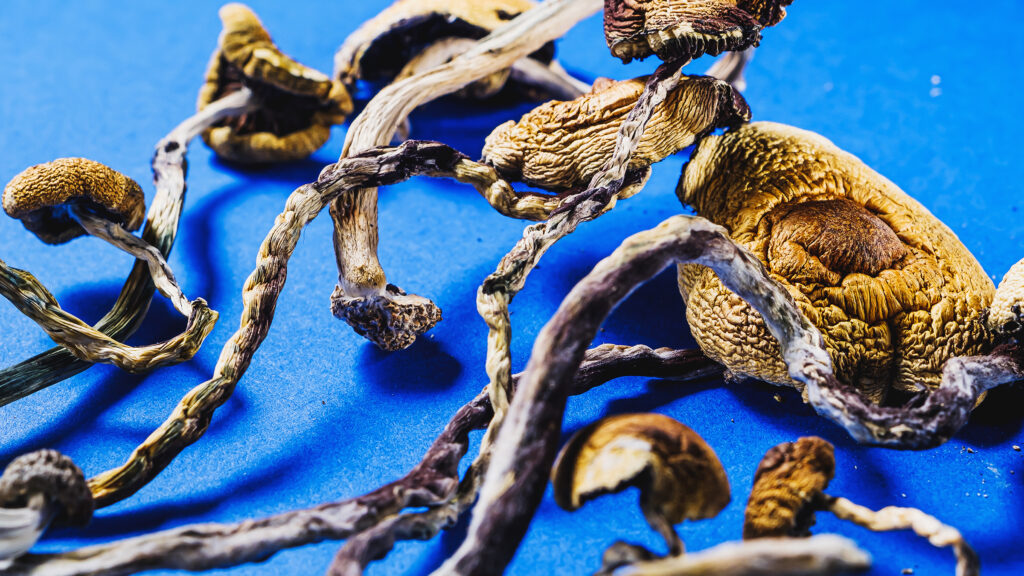
Shrooms refer to mushrooms that contain psilocybin and psilocin, two psychoactive compounds found in over 180 species of fungi.
The most studied species include:
- Psilocybe cubensis
- Psilocybe semilanceata
- Psilocybe cyanescens
These compounds are not active until metabolized by the body, where psilocybin converts into psilocin, which interacts with serotonin receptors.
How Psilocybin Affects the Brain
Psilocybin primarily interacts with the 5-HT2A serotonin receptor, which plays a key role in perception, mood, and cognition.
Research from institutions such as Johns Hopkins University and Imperial College London shows that psilocybin can temporarily:
- Alter sensory processing
- Change emotional perception
- Reduce activity in the brain’s default mode network
- Increase neural connectivity between brain regions
This is why users in clinical studies report changes in thinking patterns and perception of reality.
What Researchers Say It Feels Like (Clinical Observations)
In controlled research environments, participants often describe psilocybin experiences in terms of:
Changes in Perception
Researchers note that subjects may experience:
- Enhanced color perception
- Distorted sense of time
- Increased sensory awareness
However, these effects vary widely depending on dosage, environment, and individual brain chemistry.
Emotional Amplification
Clinical studies show that psilocybin can intensify emotions. Participants may report:
- Heightened emotional awareness
- Increased empathy
- Deep introspection
This is why psilocybin is being studied for mental health conditions such as depression and anxiety.
Cognitive Shifts
Research indicates temporary changes in thought patterns such as:
- Abstract thinking
- Symbolic interpretation of experiences
- Reduced rigid thought loops
Scientists refer to this as “cognitive flexibility.”
Why Experiences Vary So Much
One of the most important findings in psychedelic research is that no two experiences are identical.
Factors influencing effects include:
- Individual brain chemistry
- Mental health status
- Environment (“set and setting”)
- Dosage and potency
- Previous experiences with altered states
Because of this variability, researchers caution against generalizing personal stories.
The Role of Set and Setting
In clinical trials, “set and setting” is considered one of the most important factors.
- Set = mindset, expectations, emotional state
- Setting = physical and social environment
Studies show that a supportive, controlled environment leads to more positive psychological outcomes, while stressful environments can increase anxiety.
Potential Psychological Effects Observed in Studies
Scientific literature documents a range of temporary psychological effects:
Positive Observed Effects
- Increased emotional insight
- Feelings of connectedness
- Enhanced introspection
- Reduced depressive symptoms (in clinical trials)
Challenging Effects
- Temporary confusion
- Anxiety in some individuals
- Disorientation
- Emotional intensity
These effects are carefully monitored in medical research environments.
What It Does NOT Mean
It is important to clarify what psilocybin is not:
- It is not a recreational “party substance” in clinical research
- It does not guarantee positive experiences
- It does not produce the same effect for everyone
- It is not risk-free or universally beneficial
Medical and Scientific Research
Recent years have seen a surge in psilocybin research for:
- Treatment-resistant depression
- PTSD
- Anxiety disorders
- End-of-life psychological distress
- Addiction therapy
Early studies show promising results, but psilocybin is still classified as a controlled substance in many countries and is only used legally in regulated research settings.
Risks and Considerations
Even though psilocybin is natural, it is not without risks.
Psychological Risks
- Anxiety or panic reactions in some cases
- Confusion during altered perception
- Emotional overwhelm
Health and Safety Risks
- Misidentification of mushrooms in the wild
- Unregulated product variability
- Lack of medical supervision outside clinical settings
Legal Risks
Laws differ widely across regions, and psilocybin remains illegal in many countries.
Why People Search “What Does It Feel Like”
Search trends show that most users are motivated by:
- Curiosity about altered states of consciousness
- Interest in mental health research
- Exposure to online stories and social media content
- Confusion between recreational and medical information
Understanding the science helps separate facts from exaggerated claims.
Natural Alternatives in Wellness
For people interested in mushroom-related wellness without psychoactive effects, functional mushrooms are widely studied:
- Lion’s Mane (cognitive support research)
- Reishi (stress and relaxation studies)
- Cordyceps (energy and endurance research)
These are non-psychoactive and legal in most countries.
More educational resources are available at:
organicshroomcapsules
Everyone has the same experience
Experiences vary dramatically between individuals.
It always feels good
Effects can be positive or challenging depending on multiple factors.
It works like recreational drugs
In research, it is treated as a psychological tool under supervision.
Conclusion
So, what does it feel like to do shrooms? According to scientific research and clinical observations, psilocybin can temporarily alter perception, emotions, and thought patterns in highly variable ways depending on the individual and environment.
However, there is no single universal experience, and outcomes can range from insightful to challenging. This is why modern science emphasizes controlled, clinical use rather than informal experimentation.
As research continues, psilocybin may play an important role in mental health treatment, but for now it remains a complex psychoactive compound that should be understood through science, not internet myths.
For more educational content on mushrooms and natural wellness:
https://organicshroomcapsules.com/
